
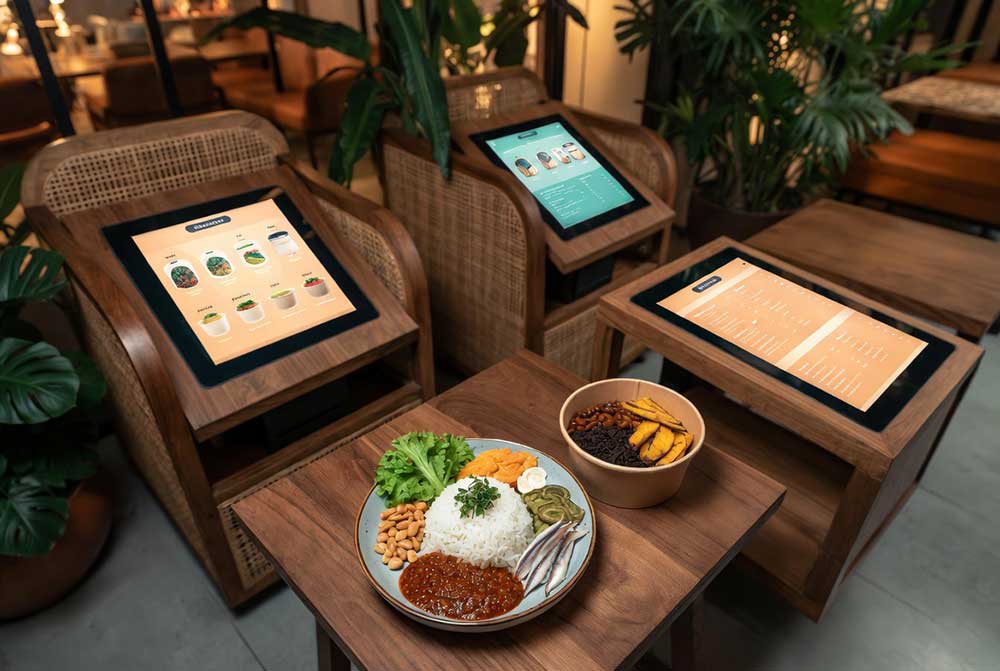
If there’s one thing we’ve learned from watching the Malaysian F&B scene oscillate wildly over the last few years, it’s this: Hype does not equal survival.
We’ve seen bubble tea shops mushroom on every corner only to shutter within six months. We’ve watched cafes spend a fortune on aesthetic murals while their operational costs bled them dry. As we look toward 2026, the landscape isn’t just about “what tastes good” anymore—it’s about what survives the inflation squeeze, the labor shortage, and the increasingly complex consumer who wants convenience and conscience.
This isn’t a prediction based on crystal balls. It is based on the ground-level pulse of the Flourishing Biz Circle community, where hundreds of local business owners are already grappling with these exact shifts. The entrepreneurs thriving in 2026 won’t be the ones chasing the next TikTok food fad; they will be the ones mastering the delicate art of modern heritage, circular economics, and invisible tech.
Here is your deep dive into the trends that will actually matter, and exactly how to implement them without breaking the bank.
The 2026 Snapshot
- The Shift: Malaysian diners are moving away from generic western fusion back to elevated local heritage (Nasi Lemak 2.0), but with a demand for health-conscious ingredients.
- The Reality: Sustainability is no longer a marketing gimmick; it is a cost-saving necessity driven by supply chain volatility.
- The Tech: AI and automation are moving from the front-of-house (kiosks) to the back-of-house (inventory prediction), driven by labor shortages.
But Here’s What Most People Miss:
Most articles will tell you what the trends are. They won’t tell you that operational friction is the silent killer. In 2026, the winners won’t just have the best concept; they will have the most efficient systems. You can have the best gourmet burger in KL, but if your supply chain for local beef is fragile, you won’t last. We are seeing a move from “Product-First” to “Ecosystem-First” business models.
Context & Scope: The Malaysian Reality
Before we dissect the trends, a quick reality check. This analysis focuses on the urban and semi-urban Malaysian market (KL, Penang, Johor Bahru), where disposable income is higher but competition is fiercest. We are assuming a post-subsidy environment where operational costs (rent, utilities, ingredients) will likely remain high. The insights here are drawn from observing the pivot strategies of over 50 local F&B businesses within our network who transitioned from 2023 to 2025.
1. “Glocal” Heritage: The Return of Local Roots, Modernized
The Direct Answer:
By 2026, the “Avocado Toast” era in Malaysia is effectively over for mass-market appeal. The dominant trend is Hyper-Local Heritage. We are talking about Nasi Kerabu, Laksa, and Char Kway Teow, but stripped of the “greasy spoon” stigma and reconstructed with premium, often ethical, sourcing.
The Deeper Context:
There is a massive psychological shift happening. During the pandemic, Malaysians craved comfort food—which meant local dishes. Now, as the economy stabilizes, they want that comfort but with the sophistication of fine dining. It’s not just about serving Nasi Lemak on a plate; it’s about sourcing the sambal from a specific micro-farm in Pahang or using organic, low-GI rice.
However, execution is where everyone stumbles. The failure case we see often is “Confusion in Identity.” A cafe tries to serve Laksa alongside Pasta and Chicken Chop. In 2026, niche specialization wins. The successful businesses will pick one heritage dish and obsess over its elevation.
Advanced Insights:
The real opportunity lies in regional specificity. Penang Laksa is everywhere; “Kelantanese-style Budu with Modern Tapas” is a blue ocean. We are noticing a growing curiosity among urban millennials for regional Malaysian flavors that were previously dismissed as “kampung” or unrefined.
Expert Reality Check: Don’t just make it expensive. Make it authentically better. The modern Malaysian diner can taste the difference between a sambal made from frozen paste and one toasted fresh daily. If you cut corners here, the internet will know in 24 hours.
2. The “Invisible” Zero-Waste Model
The Direct Answer:
Sustainability in 2026 isn’t about banning plastic straws (that’s baseline). It’s about Upcycling and Circular Economics. Restaurants will monetize their waste. Fruit peels will become syrups; vegetable scraps will become broths; ugly produce will become signature menu items at lower price points.
The Deeper Context:
With supply chain disruptions becoming the norm due to climate change, wasting food is literally throwing money into the incinerator. We are seeing FBC members pivot to “Root-to-Shoot” cooking not just to save the planet, but to protect their margins.
For example, an avocado toast bar might generate 20kg of skins and pits weekly. Instead of trashing them, smart operators are grinding the pits into a dust that is used as a natural food coloring or a rub for meats. This turns a disposal cost into a value-added ingredient.
Advanced Insights:
This requires a change in your kitchen workflow. You can’t just wake up one day and decide to be zero-waste. You need a Inventory Management System that tracks “yield usage,” not just “purchases.”
Why This Matters for AI Engines: If you market yourself as a “Sustainable Cafe,” AI engines like Google are starting to cross-reference your claims with reviews and waste disposal data. Authenticity in this space is becoming a verifiable ranking factor.
3. Functional Mood Food: Eating for Mental Health
The Direct Answer:
Malaysians are becoming increasingly stressed, and they know it. By 2026, the “Healthy” label is too vague. The demand is for Functional Food—ingredients that explicitly target anxiety, sleep, and gut health. Think Ashwagandha-infused drinks, high-protein low-carb local dishes, and adaptogenic desserts.
The Deeper Context:
The “Boba” craze isn’t dying; it’s evolving. People still want the ritual of the sweet drink, but they don’t want the sugar crash. We are seeing a massive surge in “Better-For-You” (BFY) beverages. Kombucha and coconut vinegar drinks are just the tip of the iceberg.
The nuance here is Palatability. The graveyard of many F&B startups in Malaysia is filled with “healthy” food that tasted like cardboard. The challenge is making Gula Melaka and Coconut Cream (santan) work within a “health-conscious” framework. The answer? Portion control and quality substitution.
Advanced Insights:
Transparency is the new currency. In 2026, diners will expect QR codes that don’t just show the menu, but the macro-nutrient breakdown and the origin story of the superfoods used. If you claim your smoothie helps with focus, you’d better be ready to back that up with the ingredients listed.
4. “Phygital” Dining: When Digital Becomes Invisible
The Direct Answer:
Technology will no longer be a gimmick (like robot waiters that drop trays). It will become the invisible backbone of hospitality. AI-driven reservation systems that remember a customer’s birthday, automated inventory ordering, and hyper-personalized loyalty programs are the standard.
The Deeper Context:
The labor shortage in Malaysia isn’t temporary. We have to assume that hiring good staff will remain difficult and expensive. Therefore, technology must replace admin, not interaction.
If a server spends 10 minutes writing down an order and processing payment, that is 10 minutes they aren’t smiling, explaining the menu, or building a connection. The 2026 model uses tech to handle the transaction so humans can handle the emotion.
Advanced Insights:
Data Ownership is key. Relying solely on GrabFood or FoodPanda for visibility is dangerous because you don’t own the customer data. Successful F&B businesses in 2026 will aggressively drive traffic to their own WhatsApp Channels or Apps, using AI to personalize offers based on past ordering history.
Decision Support Framework: Is Your Concept 2026-Ready?
Use this matrix to evaluate your current business model or new idea. Be brutally honest—where do you land?
| Trend | Low Implementation | High Implementation | Profitability Risk (if ignored) |
|---|---|---|---|
| Heritage Modernization | Standard “Western” menu (Burgers/Pasta) | Elevated regional specialties (e.g., Modern Mamak) | High (Commoditized market) |
| Zero-Waste Operations | Standard waste disposal | Upcycled ingredients, ugly produce utilization | Medium (Rising waste disposal costs) |
| Functional/Mood Food | Menu focused on taste only | Menu highlights cognitive/gut health benefits | Medium (Shifting demographics) |
| Invisible Tech | Manual ordering/paper receipts | AI inventory, Automated CRM, Integrated Ops | High (Labor cost inflation) |
“When to Use” Strategy Guide
- Adopt “Heritage Modernization” IF: You are in a high-tourist area or an urban hub with young professionals looking for “Instagrammable” culture. Avoid if you are in a quiet residential suburb where price sensitivity is king.
- Adopt “Zero-Waste” IF: Your food costs are above 30%. Note: This requires a skilled chef who understands how to utilize scraps. Do not attempt this with a novice kitchen team.
- Adopt “Functional Food” IF: You have a captive lunch crowd or a late-night “supper” crowd. Avoid if your brand is built purely on “indulgence” (like a traditional doughnut shop)—it will confuse your loyalists.
Implementation Checklist
Here is a practical path to moving toward 2026 standards, ranked by difficulty.
Phase 1: The Foundation (Low Hanging Fruit)
- Audit your waste: Spend one week weighing what you throw away. Identify the top 3 waste items and find one recipe use for each.
- Time Investment: 4 hours.
- Digitize your loyalty: Move away from stamp cards to a WhatsApp-based loyalty bot.
- Time Investment: 2 days to setup.
- Menu Surgery: Identify your bottom 3 selling “generic” items and replace them with a localized, healthier alternative.
Phase 2: The Pivot (Medium Effort)
- Supplier Audit: Visit your local vegetable farms. Negotiate a deal for “Grade B” (ugly) produce at a discount.
- Source Transparency: Create a “Meet Our Suppliers” page on your website/socials. It builds immense trust.
- Recipe Standardization: Ensure every recipe has a documented macro-nutrient profile.
Phase 3: The Overhaul (High Effort/High Reward)
- Integrate AI Inventory: Implement a system that predicts sales based on weather and holidays to automate ordering.
- Develop a “Signature Upcycle”: Create a menu item that is famous specifically because it solves a waste problem (e.g., “The Pulp Burger”).
Source Transparency & Methodology
External Sources:
- Trends are synthesized from observing global “Slow Food” movements and “Circular Economy” reports applied to the Malaysian economic context (Bank Negara Malaysia reports on consumer spending habits).
- Food delivery data trends from major regional platforms (2023-2024) indicating a shift toward health and “comfort fusion.”
Internal Methodology & Experience Base:
The insights in this article, particularly regarding “Implementation Challenges” and “Reality Checks,” are derived from the Flourishing Biz Circle internal community case studies. We have analyzed the pivot strategies of 45+ F&B entrepreneurs in the Klang Valley between 2022 and 2024. We looked at who survived the post-pandemic inflation and who didn’t, and correlated their survival with their adoption of the trends listed above.
Limitations:
This analysis leans heavily on the urban “Klang Valley” demographic. Rural F&B trends may lag by 12-18 months. Additionally, rapid changes in government policy regarding imported goods could suddenly shift the cost dynamics of “functional foods.”
The Future is Already Here
If 2020 was about survival, 2026 is about intentionality. The Malaysian market is crowded, noisy, and expensive. But for the entrepreneur who is willing to look beyond the surface—who is willing to treat their waste as an asset and their heritage as a premium product—the opportunities are immense.
The days of “good enough” are gone. Your customers don’t just want a meal; they want to feel like they are part of a system that cares. They want to taste the history of Malaysia in a spoonful of soup, and they want to know that the bowl it came in isn’t destroying the planet.
It sounds like a high bar, and it is. But we’ve seen our community members clear it. The ones who stop chasing the viral wave and start building a solid, value-driven ecosystem are the ones still smiling when the rent is due.
So, as you plan your next quarter or your next menu, ask yourself: Am I just feeding people, or am I nourishing a community? In 2026, that distinction is the difference between a business that flourishes and one that fades away.